Autonomous
anti-drone
defense.
“Defense must always be cheaper than attack.”
TDS-S detects, classifies, decides and engages weaponised UAS at a fraction of the cost of legacy interceptors. One operator. One crate. Five minutes to live.
01 · The Problem
The battlefield is asymmetric.
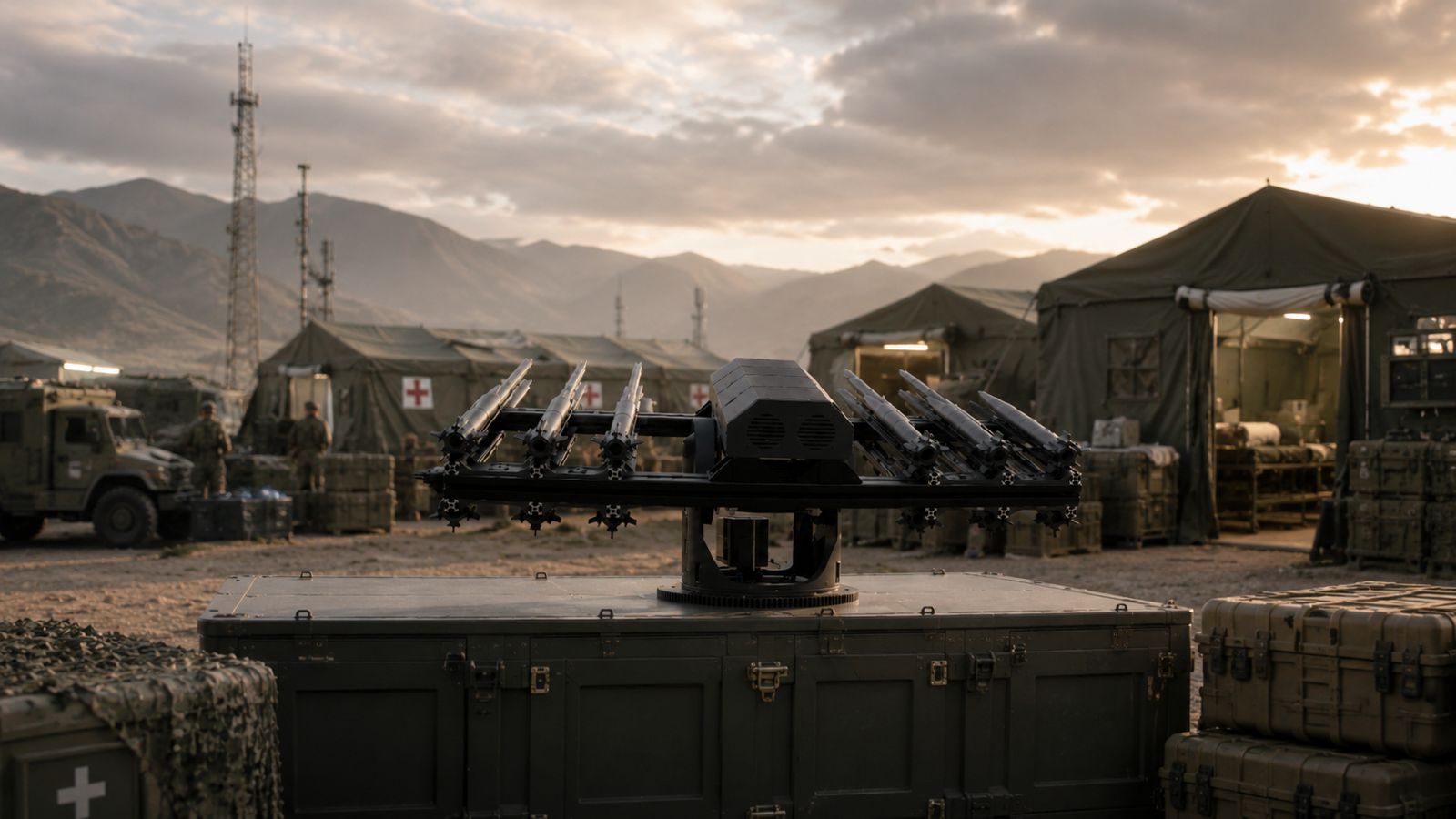
Case study · Field hospital
A single €1K drone can shut down a mobile surgical unit for weeks.
Unit Economics
A €1,000 drone threatens infrastructure worth hundreds of millions. Legacy defense costs 500× more. The math no longer works.
Attacker
€1K
weaponised UAS
Defender
€0
legacy interceptor
TDS-S re-shapes the curve
500×
Cost deficit · attacker vs defender
2 min
Drone setup time
2–6 h
Legacy system setup
€100M+
Value of a single exposed asset
02 · The Solution
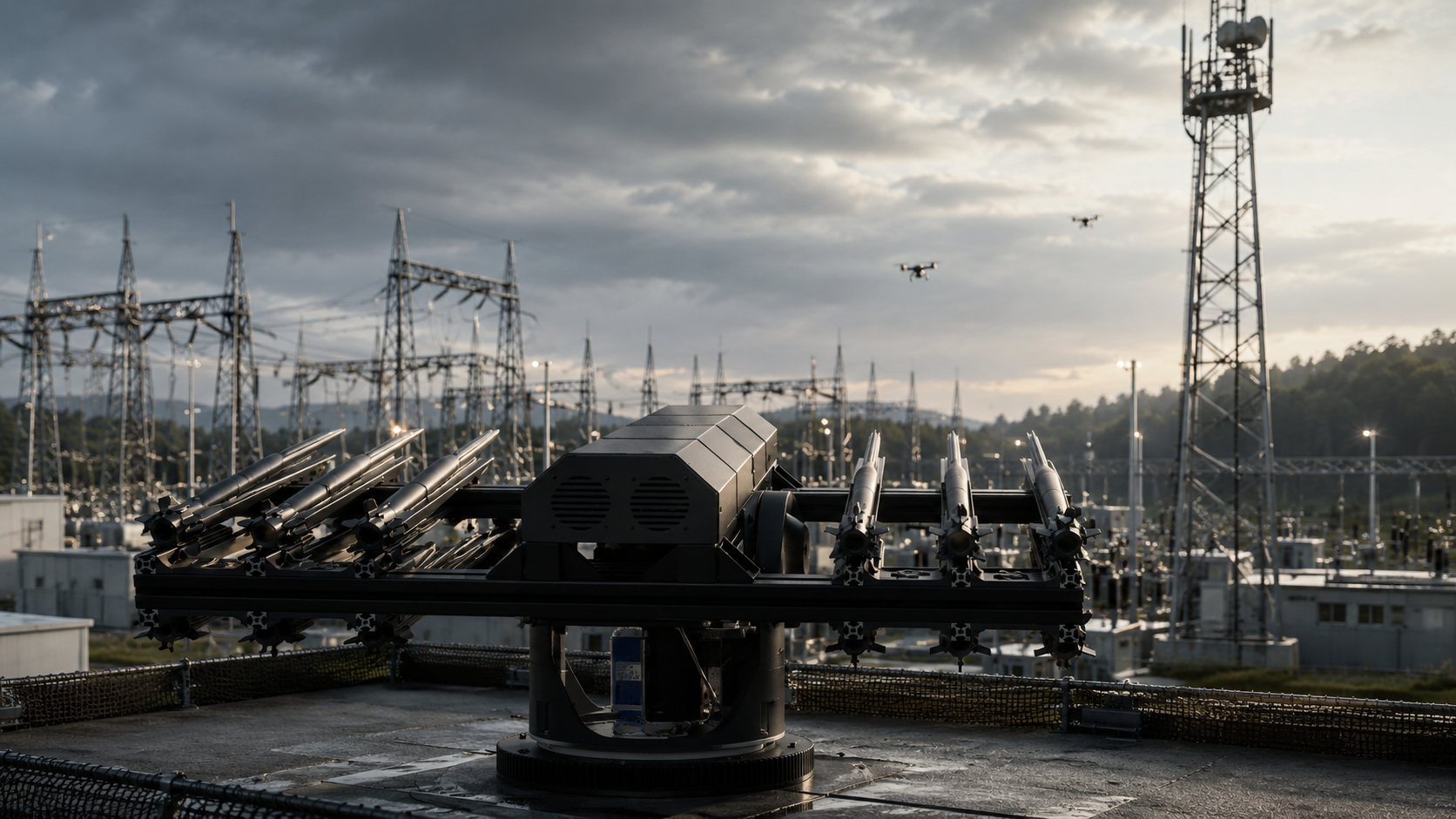
TDS-S
Trajectory Defense System — Single
A compact, autonomous anti-drone system that detects, classifies, and defeats weaponised UAS at a fraction of the cost of legacy systems.
10×
Cheaper than the attacker
500 m
Protection radius per unit, scalable by networking
5 min
Field deployment — single operator, single crate
03 · How It Works
Detect. Classify. Decide. Engage.
Detect
Continuous 360° electro-optical scan, day and night. IR fusion extends night coverage to full 500 m envelope.
Classify
Edge-inference AI distinguishes UAS from birds, aircraft, and other traffic. No cloud dependency.
Decide
Operator-in-the-loop by default. Fully autonomous scan & engage mode available for 24/7 unattended operation.
Engage
Kinetic interceptor defeats the UAS. Effective against EMS/jamming-resistant threats, FPV and autonomous swarms.
04 · Protected Sites
High-value, civilian-adjacent sites.
Medical
Field hospitals
Protect mobile surgical units and casualty evacuation.
Energy
Power plants
Shield reactors, substations, gas terminals.
Aviation
Airports
Cover runways, taxiways and perimeter.
Maritime
Ports
Defend quay, terminal and anchored fleet.
05 · Contact
Let's
talk.
Ready to protect your site? Request a classified brief — our team will respond within one business day.